It is a Saturday morning. You have a sledgehammer in the garage and a wall you have hated for years. The internet makes it look easy. How hard can it be?
This is the moment to put the hammer down for ten minutes and read this.
Because the answer to “can I just knock this down?” is sometimes yes, sometimes absolutely not — and telling the two apart is the whole game.
There are two kinds of walls.
Some walls only divide space. They separate one room from another and hold up nothing but themselves. These are partition walls, and many of them can come out without much fuss.
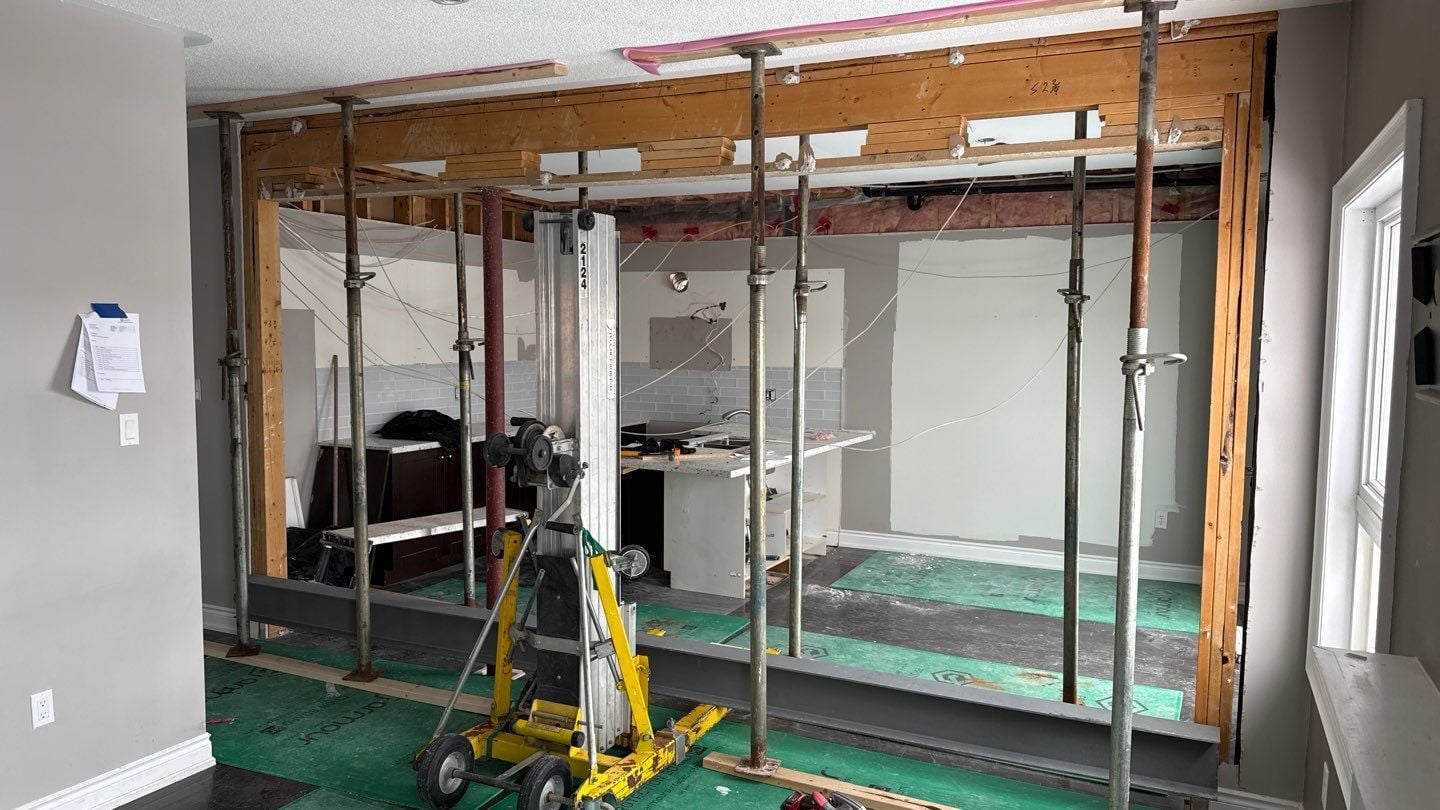
Other walls are holding your house up. They carry the weight of the floors, the roof, or the storey above, and they pass that weight down to the foundation. These are load-bearing walls. Take one out the wrong way and the structure above it has nowhere to go.
The problem is, you cannot always tell which is which just by looking. A thin-looking wall can be load-bearing. A solid, heavy-looking wall can be a simple partition. The label is not on the outside.
You read it from the bottom up.
Here is how the pros actually figure it out — and it is not by guessing from the room you are standing in. You read the structure from the basement up.
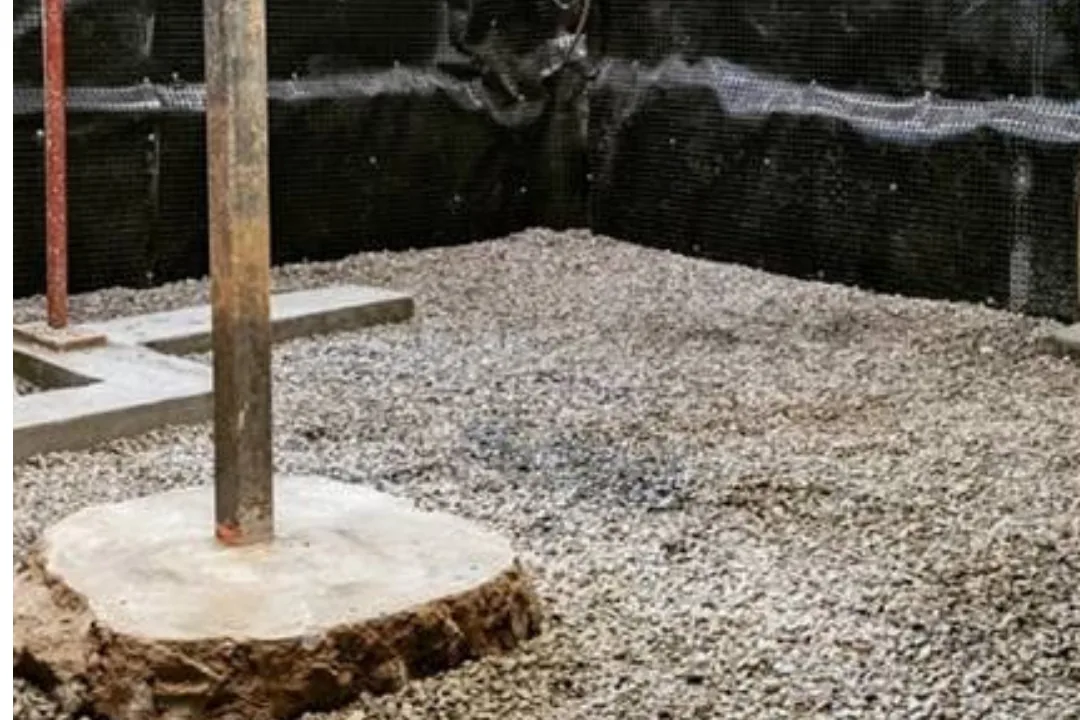
Start in the basement. Look for the main steel beam or the big built-up wood beam running across the space, and the posts holding it up. That beam is carrying the middle of your house. Now look at where it sits.
If there is a wall on the floor directly above that beam, that wall is very likely load-bearing — it is sitting right on the home’s backbone. Look at the floor joists, too. Where they meet or overlap, where you see solid blocking between them, that is where load is being transferred. Walls under those points are doing structural work.
You are following the path the weight takes down to the ground. That is what tells you the truth — not the thickness of the wall, not which way it faces.
Do not trust the “trusses mean no load-bearing walls” myth.
You may have read online that if your home has roof trusses, none of your interior walls are load-bearing. People repeat this constantly. It is not a rule you should bet your home on.
A trained eye can read a truss. An experienced builder or engineer looks at the truss type, where it bears, and how it carries load, and can tell you what is structural and what is not. The danger is not that trusses cannot be read — it is that a homeowner reading a blanket rule online cannot read them, and that rule is wrong as often as it is right.
The truss also only deals with the roof. It says nothing about the floor above a two-storey home, or about point loads landing in specific spots. So even where trusses are involved, the honest way is still the same: have someone who knows how to read the whole load path — from the basement up — look at it before you swing anything.
A “simple” partition can still trigger a permit.
Say you have confirmed it really is just a partition. You still are not always free to swing away.
What is inside the wall matters. If there is plumbing in it, moving that plumbing can require a permit. The same goes for major electrical work or heating and cooling ducts that have to be rerouted. Knock the wall out and you may be into permit territory anyway, just through what was hidden inside it.
There are other triggers, too. Removing a wall that is part of a fire separation — like between a house and an attached garage, or in a home with a basement apartment — is a code issue, not just a cosmetic one. And changing how a space is used can bring its own rules.
The point is simple: “non-load-bearing” does not automatically mean “no permit.” It just means no beam.
Why this matters long after the dust settles.
It is tempting to skip all of this. The wall is out, the room looks great, who is going to know?
Two people, eventually. A future buyer’s home inspector, who can spot a removed wall with no permit on record and turn your sale into a negotiation — or a problem. And your insurance company, which can use unpermitted structural work as a reason to deny a claim if anything ever goes wrong.
The Saturday-morning shortcut has a way of sending you a bill years later.
So — can you just knock it down?
Maybe. If it is truly a partition, with nothing critical inside it, and no code issue attached. But the only way to know that for sure is to read the structure properly first.
That is exactly what we do before we quote any wall: trace the load path, confirm what the wall is really doing, and tell you honestly whether it is a quick job or a structural one — before anyone picks up a hammer.
Want the bigger picture first? Start with To Open or Not to Open? — the story of one Whitby family who asked this exact question. And if you are weighing the beam choice, see Flush Beam or Drop Beam?
And when you want your own wall assessed the right way, our wall removal and beam installation page walks through how we figure out what is safe, handle the permit, and open up your home properly.