Maya stood in her kitchen in Whitby and looked at the wall.
It was the same wall she had looked at for nine years. The one that cut the kitchen off from the living room. The one that meant whoever was cooking was always alone, while everyone else was on the other side, in the bright room with the big window.
She had a picture in her head. One big open space. Light pouring all the way through. The kids doing homework at the island while she made dinner. Sam watching the game just steps away instead of a room away.
“What if we just took it down?” she said.
Sam looked up. “Can we even do that?”
That is the question. And it is the right one to ask — before the hammer comes out, not after.
The dream is real. So is the catch.
Taking down a wall is one of the best things you can do to a home. It connects your rooms. It fills the space with light. It makes a house feel twice as big without adding a single square foot. It is the number one thing buyers want, too.
But here is what most people do not know until it is too late. Not every wall is just a wall.
Some walls are holding up your house.
There are two kinds of walls in your home.
Some are just dividers. They split one room from another and hold nothing up. Those can come down easily.
But some walls are doing a job you cannot see. They are carrying the weight of everything above them — the floor, the roof, sometimes the whole second storey. These are called load-bearing walls. And if you take one of those down without a plan, the weight it was holding has nowhere to go.
That is not a renovation. That is a problem.
The wall Maya wanted to remove was load-bearing.
When the right people looked at it, they could see it. The way the floor above sat on it. The beam in the basement lined up right underneath. That wall was holding part of her second floor up.
This is the moment a lot of homeowners get bad news from the wrong contractor — after the wall is already half gone. Maya got it before. So she had a choice, not a crisis.
Done right, you do not lose the dream. You just do it safely.
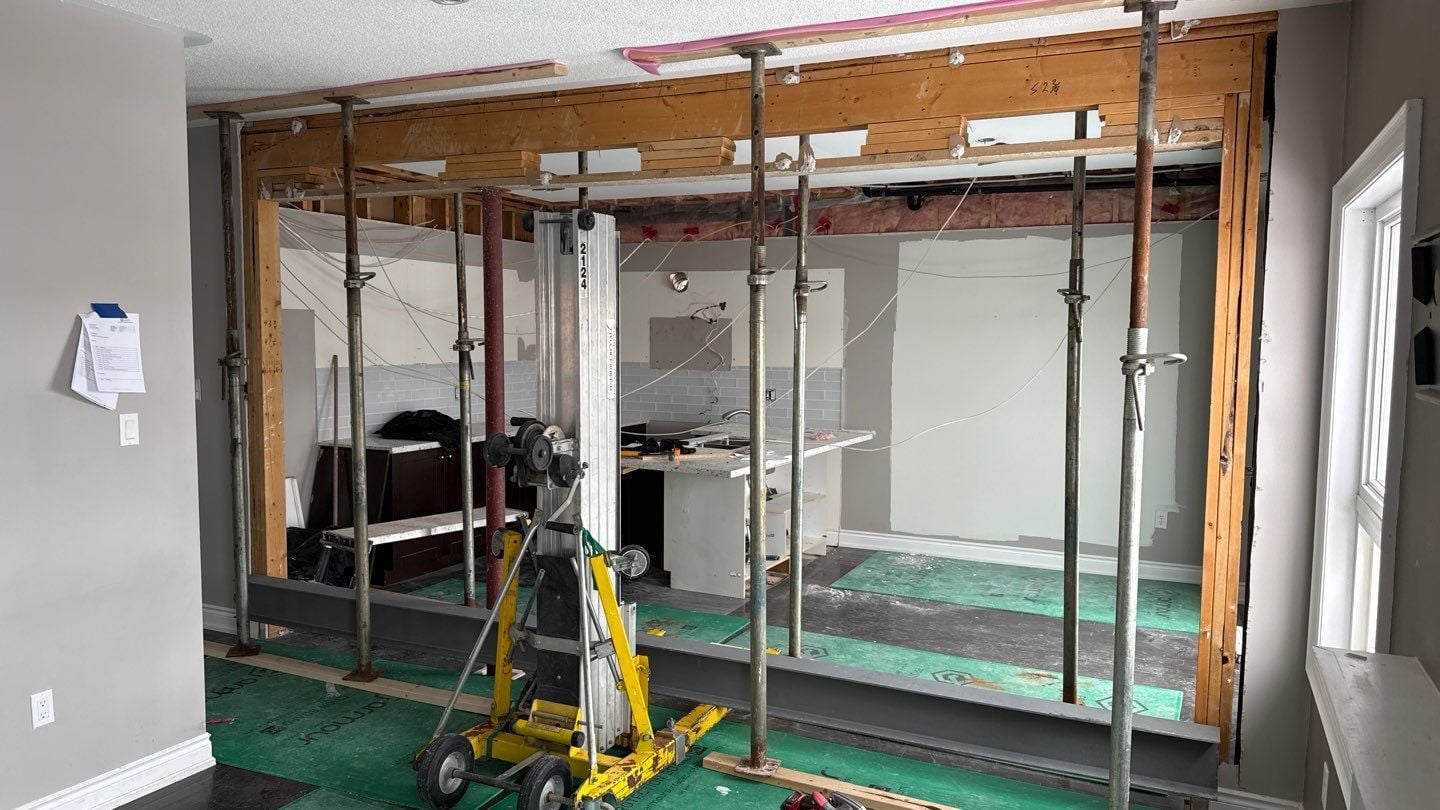
Here is the good news. A load-bearing wall can still come down. You just put something in its place to carry the weight — a beam, sized by an engineer, supported the right way down to the foundation.
You get the open space. You get the light. You get the dream. You just do it with a plan, a permit, and the structure handled properly, so your home stays safe and sound for the next fifty years.
Maya and Sam got their open main floor. The kids do homework at the island now. And there is a beam overhead doing the quiet work the wall used to do — installed the right way, signed off, and on the record.
So — to open, or not to open?
Open. Almost always, open. Just do it the right way.
If you are staring at a wall in your own home and wondering what is behind it, that is exactly where to start — by finding out what the wall is actually doing before anyone touches it.
Want to understand the structure side before you call anyone? We broke it down in two follow-up reads:
- Flush Beam or Drop Beam? What Really Holds Up Your Home After the Wall Comes Down
- Can I Just Knock This Down? How to Tell If a Wall Is Load-Bearing — and When You Need a Permit
And when you are ready to find out what your wall is really doing, our wall removal and beam installation page walks through exactly how we assess, engineer, and open up a home the right way.