
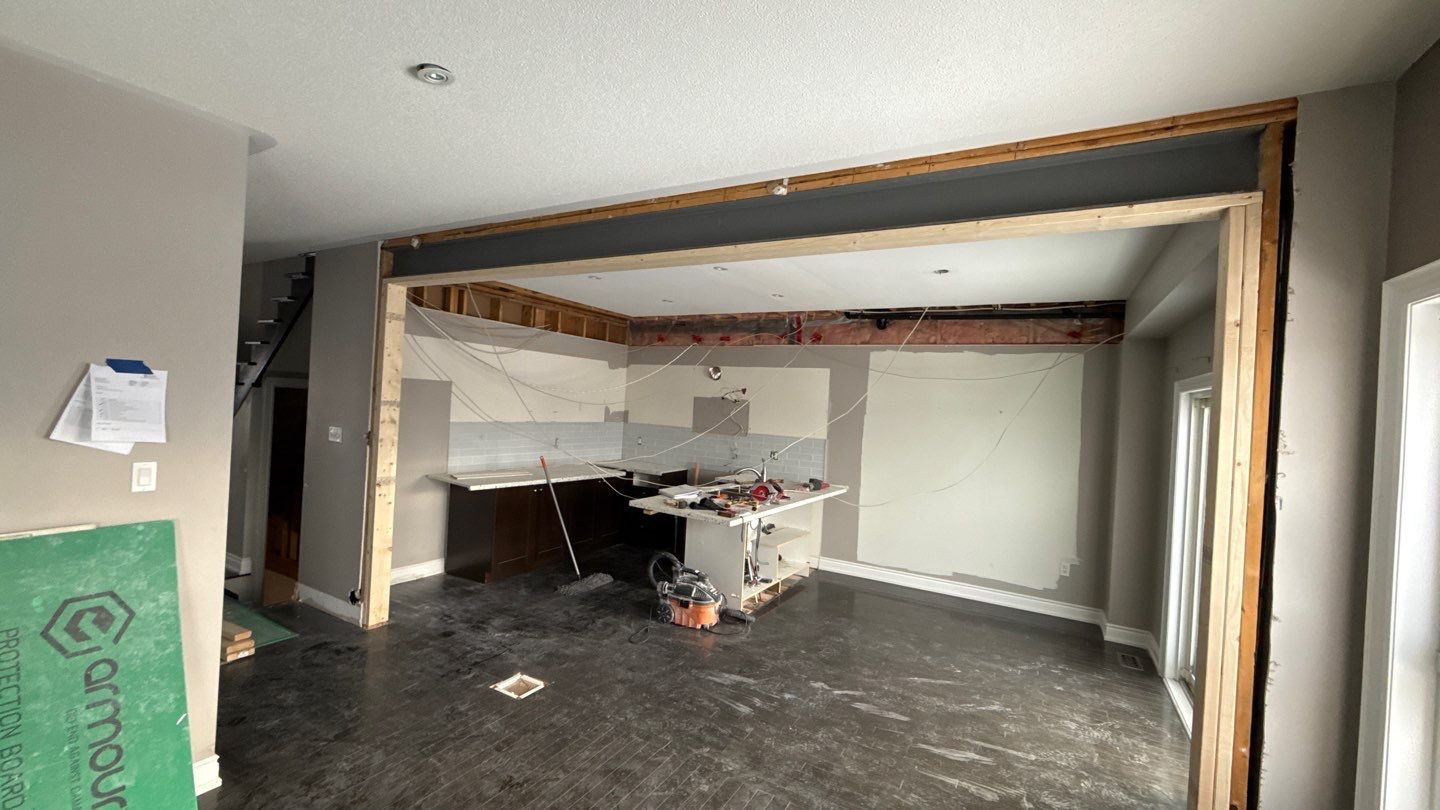
In our last post, Maya and Sam learned the wall between their kitchen and dining room was holding up their house. So they did the smart thing. They planned for it before they swung a hammer.
But that opened a bigger question. Once you take a wall out, what actually holds the weight? And how do you do it the right way?
Let’s walk through it in plain words.
A beam takes over the wall’s job.
When a load-bearing wall comes out, a beam goes in to carry the weight. You have two main choices for that beam. The choice changes how your ceiling looks.
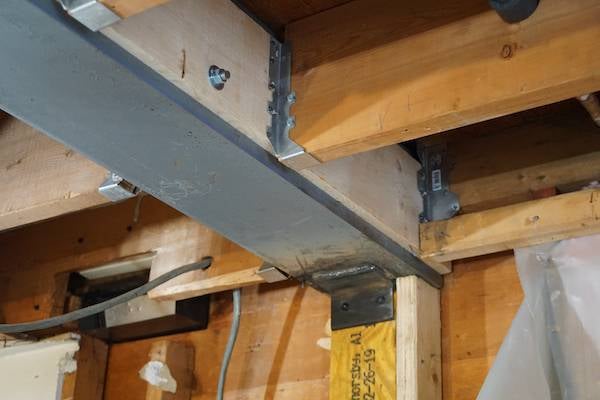
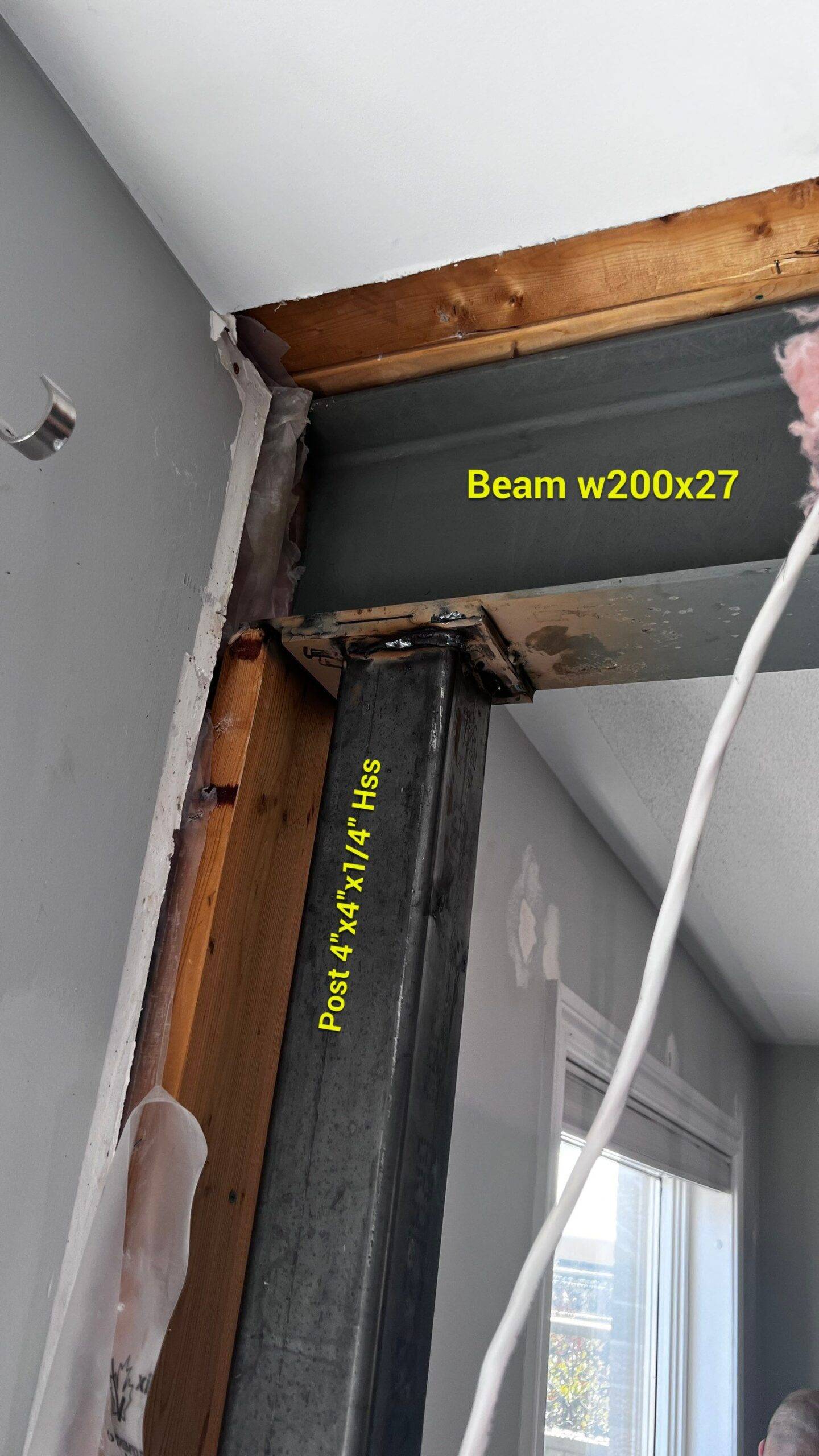
A drop beam hangs below the ceiling.
A drop beam sits under the floor above. You can see it. It hangs down a few inches, like a thick line across your ceiling.
Some people do not mind it. Some even like the look. It is often the cheaper and faster choice, because the beam just sits below everything that is already there.
A flush beam hides inside the ceiling.
A flush beam is tucked up inside the floor above, so the ceiling stays flat and smooth. You do not see it at all. This is the clean, open look most people picture.
But it costs more. The crew has to fit the beam up into the floor and re-hang the joists off it. More work, more money.
The weight has to land somewhere.
Here is the part people forget. A beam does not just float there. It carries the weight of your home, and that weight has to travel all the way down to the ground.
The beam rests on posts at each end. Those posts carry the load down. And under those posts, there has to be something strong enough to take it — often a proper footing in the basement floor. This is called the load path: the weight travels from the roof, through the beam, down the posts, into the footings, and into the ground.
If any link in that path is missing, the whole thing is unsafe. A beautiful flush beam means nothing if the post under it is standing on a basement slab that was never built to hold it.
This is why you need an engineer.
A structural engineer figures out the whole load path. How big the beam needs to be. What it should be made of — engineered wood (called LVL) or steel. How big the posts and footings have to be.
They put it all on a drawing and stamp it. That stamp is what makes it real. It is the proof that the math was done by someone qualified to do it.
And it is why you need a permit.
In Ontario, removing a load-bearing wall needs a building permit. The city will not give you that permit without the engineer’s stamped drawings. Then an inspector comes and confirms the work was done to the plan.
This is not the city making your life hard. This is the system that keeps your home standing.
Skipping it costs more than it saves.
Here is what no one tells you. An unpermitted wall removal does not just disappear once the drywall goes up.
It shows up when you sell. A buyer’s home inspector or lawyer can find that a wall was removed with no permit on record. Now you are explaining it, lowering your price, or opening the ceiling back up to prove it was done right.
It can also hurt you with your insurance. If something ever goes wrong, an insurer can deny a claim on work that was never permitted. The cheap, fast route becomes the expensive one.
Done right, it is simple — for you.
When it is handled properly, you barely think about any of this. The engineer is coordinated. The drawings are stamped. The permit is pulled. The beam is sized and installed. The inspector signs off.
You just get your open space — and a clean paper trail that protects your home for as long as you own it.
So the real question is not just flush or drop. It is: who is making sure the weight has somewhere to go?
New here? Start with the story behind it all: To Open or Not to Open? And still wondering whether your wall can even come out? Read Can I Just Knock This Down? How to Tell If a Wall Is Load-Bearing — and When You Need a Permit.
And when you want it assessed properly, our wall removal and beam installation page shows exactly how we handle the engineering, the permit, and the build — start to finish.